


Page 65 - CMA Journal (Jul-Aug 2026)
P. 65
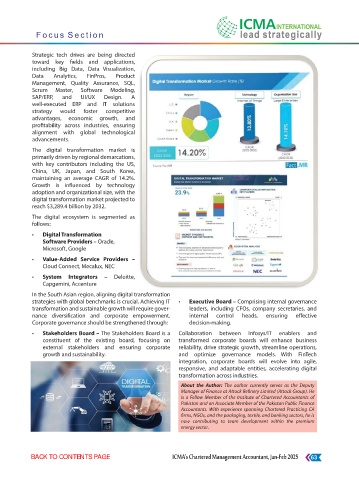
F oc us S ec t ion
Digital procurement, when integrated with electronic administrative reforms. International experiences Building Smarter Procurement Systems EPADS and the Pakistan Single Window provide an ca
Table 2: Evolution of Public Procurement: single-window systems, customs modernization and provide practical lessons for Pakistan in moving important foundation for this transition, but their tr
From Traditional to Strategic Policy Instrument digital trade documentation, can therefore contribute beyond electronic tendering towards a more or Trade Facilitation and Industrial greater interoperability with customs, taxation, compe
to faster and more e cient cross-border trade. integrated and strategic procurement ecosystem. Competitiveness business registration and logistics systems would be i
Traditional Procurement Smart Public Procurement Single
However, Pakistan's current performance highlights International Experiences and Integrating Procurement with Trade Facilitation necessary to realize the broader economic potential of
Supports broader economic and industrial policy Systems smart procurement. greater
Focus on purchasing goods & services the remaining gap: imports take an average of 33 days Pakistan's Current Position
objectives to clear and exports 19 days, while compliance costs Roadmap for Pakistan alignme
Emphasis on value for money and long-term are around 17% of trade value for both imports and International experience demonstrates that successful Pakistan should move towards stronger objecti
Emphasis on lowest cost interoperability between EPADS, Pakistan Single Pakistan's transition towards smarter public
economic value exports; moreover, only 15% of rms report exporting procurement reforms extend beyond the digitization Referen
Introduction transparency and competitiveness. Pakistan has also Strategic decision-making and performance digitally ordered goods. These indicators suggest that of tendering processes. Leading economies have Window, customs, taxation, business registration and procurement requires a gradual shift from fragmented
advanced procurement digitalization through PPRA, Compliance & Procedural Control digitalization alone is not su cient and that stronger integrated procurement with customs modernization, other relevant government systems. International digital processes towards an integrated procurement ht
Public procurement has evolved beyond its traditional EPADS and the Pakistan Single Window (PSW), but outcomes integration between procurement, trade facilitation digital government, trade facilitation and institutional experiences from Singapore, South Korea, Estonia and ecosystem. The roadmap can be structured around nd-i
role of purchasing goods, works and services to these reforms remain largely focused on operational Stand-alone procurement processes Integrated digital procurement ecosystems and logistics systems is needed to translate digital interoperability to improve transparency, e ciency Rwanda demonstrate that connecting procurement three stages: integration, consolidation and https:
become an important instrument of economic policy. e ciency rather than using procurement strategically infrastructure into more e cient trade outcomes. and industrial competitiveness. Table 3 summarizes with wider digital government and trade facilitation transformation. https:/
Governments increasingly use procurement to Manual & paper-based procedures Data-driven and technology-enabled procurement selected international experiences and highlights the infrastructure can reduce administrative duplication, procure
promote industrial competitiveness, strengthen for trade facilitation and industrial competitiveness. Operational e ciency Trade facilitation, industrial competitiveness and The integration of procurement with trade facilitation key lessons relevant for Pakistan. improve information sharing and create a more 1. The rst stage would focus on connecting existing h
supply chain resilience, facilitate international trade Against this backdrop, this article developed by ICMA supply chain resilience can generate bene ts beyond operational e ciency seamless business environment. For Pakistan, such digital platforms and establishing interoperability nt
and accelerate digital transformation. The growing Research and Publications Department examines Transaction-oriented approach Innovation-oriented and sustainable procurement by improving supplier participation, competition, The World Bank's B-READY assessment further integration would allow procurement reforms to among procurement, trade and government https:/
impact of geopolitical tensions, supply chain international experiences to identify how smart transparency and supply-chain resilience. Digital highlights this implementation gap. Pakistan scores contribute not only to transparency and e ciency but Expanding Supplier Participation and Market databases. O-OCP20
disruptions and rapid technological advancement has procurement can strengthen Pakistan's procurement Source: Authors' compilation based on OECD (2026) procurement systems can also support industrial 54.95 on public services but only 25.50 on operational Access 2. The second stage would consolidate procurement http
further reinforced the need for smarter procurement ecosystem and support its broader trade and digital competitiveness by improving access to procurement e ciency, resulting in an overall international trade also to lower transaction costs and smoother trade A more accessible digital procurement system can information across institutions, standardize digital /
systems that extend beyond compliance and cost economy objectives. Procurement decisions increasingly a ect an important instrument of national competitiveness markets and creating more predictable business score of 43.04. This suggests that while digital and processes. reduce entry barriers for businesses by providing processes and strengthen coordination between https:/
e ciency. Public Procurement as a Strategic Trade supply-chain resilience, domestic production, market and digital economic transformation. International environments. As a result, countries increasingly institutional infrastructure has improved, translating Developing an End-to-End Digital Procurement standardized procedures, transparent tender procurement authorities and relevant economic large-p
Public procurement represents a signi cant share of and Industrial Policy Tool competitiveness and economic security, encouraging experiences demonstrate how such integration can integrate procurement reforms with digital these systems into e cient trade outcomes remains a Ecosystem information and simpli ed supplier registration. agencies. https:/
major challenge.
government, customs modernization and trade
economic activity, accounting for approximately 13% governments to move from compliance-driven support trade and industrial development, o ering facilitation rather than treating them as isolated Pakistan's digital procurement reform should extend International experience, particularly from Chile and 3. The nal stage would move towards a fully t-trade
of GDP across OECD countries. International Traditionally, public procurement was viewed as an approaches towards smarter systems that integrate relevant lessons for Pakistan's evolving procurement beyond electronic tendering towards an end-to-end Rwanda, shows that digital platforms can improve integrated smart procurement ecosystem in which h
experience shows that countries such as Singapore, administrative function focused on transparency, digital technologies, innovation, industrial policy and system. procurement ecosystem covering supplier registration, transparency, competition and supplier participation procurement data and digital systems are connected htt
South Korea, Estonia and Chile have increasingly competition, cost e ciency and timely delivery. trade facilitation. The OECD (2026) similarly identi es Smart Procurement and Trade tendering, contract management, payments and while connecting procurement with other with trade facilitation, logistics and industrial policy
integrated digital procurement with customs, trade However, global supply-chain disruptions, geopolitical modern public procurement as a strategic lever for government systems. For Pakistan, strengthening allowing public procurement to function as part of the
facilitation and wider digital government systems, tensions, climate-related risks and the expansion of the sustainable economic growth, stronger domestic Facilitation performance monitoring. The experience of South digital access to procurement opportunities could wider digital economy rather than as a standalone omme
making procurement a broader tool for e ciency, digital economy have transformed its role. industries and greater resilience to economic and Trade facilitation and public procurement were Korea's KONEPS demonstrates the bene ts of administrative process. es_02a4
geopolitical challenges. integrating procurement processes with shared broaden the supplier base and create greater ndation
traditionally treated as separate policy areas, but opportunities for SMEs and domestic rms to
Modern procurement systems increasingly extend digitalization and increasingly integrated supply government databases, while Estonia's X-Road participate in public-sector supply chains. Conclusion https:/
2025/09
beyond electronic tendering by linking procurement chains have brought them closer together. Smart highlights the importance of secure interoperability Public procurement is increasingly evolving from a ati
with customs, digital trade platforms, logistics and procurement can connect government purchasing across public institutions. Such an approach could Strengthening Procurement Intelligence and conventional administrative function into a strategic
supplier development. This can reduce transaction with customs, logistics and digital trade systems, improve procurement e ciency, reduce information Supply Chain Resilience instrument for economic development, particularly as 2
costs, improve market access and transparency, and reducing administrative barriers while improving gaps and strengthen the predictability of government Integrated procurement data can enable government governments respond to digital transformation, -procur
strengthen domestic industries, making procurement transparency, competition and supply-chain e ciency. procurement for suppliers. institutions to move from transaction-based geopolitical uncertainty and changing global supply 02
Strengthening Domestic Industrial monitoring towards more informed procurement chains. International experiences demonstrate that htt
nuId=PT
Figure 1: Smart Public Procurement as a Driver of Trade Competitiveness planning and risk management. Linking procurement integrating digital procurement with trade facilitation,
Facilitation and Industrial Competitiveness Public procurement can be used more strategically to information with trade and customs data could help customs, logistics and broader government systems
support domestic industrial competitiveness by identify critical import dependencies, supplier
Digital Procurement Integrated Systems Lower Costs & creating stronger linkages between government concentration and potential supply-chain
Transparency vulnerabilities. This would strengthen the
demand and domestic productive capacity. Digital government's ability to anticipate disruptions and
procurement data can help identify sectors with strong support more resilient procurement decisions,
greater transparency local supplier potential as well as areas of signi cant
systems particularly in strategically important sectors.
import dependence, allowing procurement planning
to complement broader industrial policy objectives. Towards an Integrated Smart Procurement Model
Industrial Efficient Supply The objective should be to encourage competitive The overall objective should be to transform Pakistan's
Chains domestic production, innovation and supplier existing digital procurement infrastructure into an
development while maintaining transparency, integrated system linking digital procurement, trade
Improvement of industrial Development of efficient competition and value-for-money principles. facilitation, supplier participation, industrial
processes supply chains
competitiveness and supply-chain resilience.
ICMA’s Chartered Management Accountant, Jul-Aug 2026 63

